
In-Depth Look at IICRC Moisture Training: Elevating Building Moisture Inspection Expertise

Understanding moisture dynamics in buildings is critical for maintaining structural integrity, indoor air quality, and occupant health. As professionals tasked with diagnosing and mitigating moisture-related issues, it is essential to rely on rigorous, science-based education. The IICRC Building Moisture Inspection training offers a framework grounded in building science principles and industry standards, equipping inspectors with the skills necessary to perform accurate moisture inspections and remediation.
The Importance of IICRC Building Moisture Inspection Training in Building Science
Moisture intrusion and accumulation can lead to a host of problems including mold growth, material degradation, and compromised indoor air quality. The complexity of moisture behavior in buildings demands a systematic approach to inspection and diagnosis. The IICRC Building Moisture Inspection training emphasizes:
Fundamental building science concepts in building envelope, thermodynamics, buoyancy, thermal bridging, thermal draw, infiltration, and exfiltration.
Moisture dynamics such as vapor diffusion, capillary action, and air movement.
Moisture measurement techniques while understanding the limitations and capabilities of current technology.
Interpretation of moisture data in the context of building materials and environmental conditions.
Standards and protocols that ensure consistency and reliability in moisture assessments.
This training is designed to bridge the gap between theoretical knowledge and practical application, enabling professionals to identify moisture sources, assess damage, and recommend effective remediation strategies.

Core Components of the IICRC Building Moisture Inspection Training Curriculum
The curriculum is structured to provide a thorough understanding of moisture-related issues in buildings. Key components include:
Building Materials and Moisture Interaction
Understanding how different materials absorb, retain, and release moisture is fundamental. For example, wood and drywall have different moisture thresholds and drying characteristics, which influence inspection and remediation decisions.
Moisture Measurement Tools and Techniques
Training covers the use of tools such as moisture meters, hygrometers, infrared cameras, and data loggers. Participants learn how to calibrate instruments, perform accurate readings, and interpret results within the context of environmental variables.
Moisture Standards and Guidelines
The course aligns with ANSI/IICRC standards, providing a framework for consistent moisture assessment. This includes protocols for documenting moisture conditions, establishing baseline moisture levels, and determining when intervention is necessary.
Inspection Methodologies
Systematic inspection procedures are taught, including visual assessments, moisture mapping, and sampling strategies. Emphasis is placed on identifying hidden moisture sources such as plumbing leaks, condensation, and vapor intrusion.
Health and Safety Considerations
Moisture conditions are a primary driver of microbial growth and resulting indoor air quality (IAQ) concerns. BMI training addresses this through a building science and exposure-control approach, emphasizing proper use of PPE and containment to manage contaminant migration. Inspectors are trained to understand and justify these controls based on airflow, pressure dynamics, and site-specific conditions.
Practical Applications and Inspection Methods
Applying the knowledge gained from the IICRC Building Moisture Inspection training involves a combination of observation, measurement, and analysis. Some practical steps include:
Conducting a thorough visual inspection to identify signs of moisture damage such as staining, warping, or efflorescence.
Employing infrared thermography to detect temperature anomalies that may indicate moisture presence behind surfaces.
Using moisture meters to quantify moisture readings in suspect materials, ensuring readings are taken at multiple points for accuracy.
Performing relative humidity and vapor pressure measurements within wall cavities or HVAC systems to assess vapor conditions.
Documenting findings meticulously with photographs, moisture maps, and detailed notes to support diagnosis and remediation planning.
These methods enable professionals to pinpoint moisture sources, assess the extent of damage, and develop targeted remediation plans that address root causes rather than symptoms.
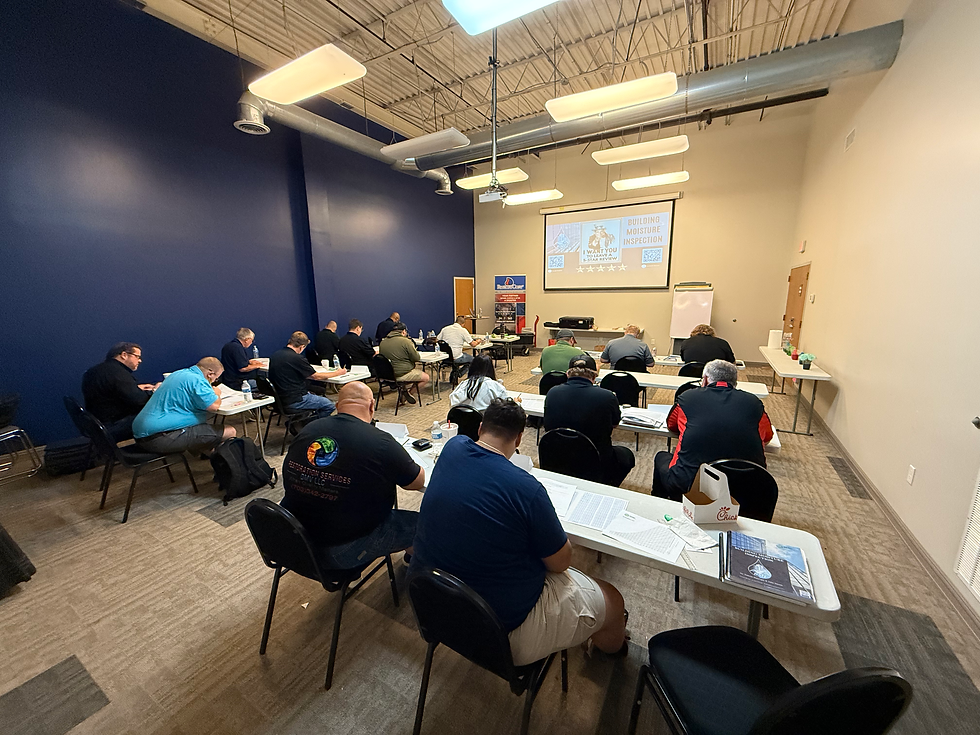
The Role of the IICRC Building Moisture Inspection Course in Professional Development
The IICRC Building Moisture Inspection course is a pivotal resource for advancing expertise in moisture diagnostics. It not only enhances technical skills but also fosters a deeper understanding of the science behind moisture behavior in buildings. By completing this course, professionals gain:
Certification recognized industry-wide, validating their competence in moisture inspection.
Access to updated standards and best practices, ensuring their methods remain current with evolving building technologies.
Improved ability to communicate findings effectively with clients, insurers, and other stakeholders.
Enhanced credibility as experts in building moisture issues, supporting roles such as expert witnesses or consultants.
This course is essential for those committed to delivering high-quality, science-based moisture inspection services that protect property and occupant health.
Advancing Building Moisture Inspection with Science-Based Education
Building Moisture Inspection (BMI) is dedicated to providing authoritative, IICRC-approved certification courses that emphasize evidence-based education. Our approach integrates:
Building science fundamentals to understand moisture transport mechanisms.
ANSI/IICRC standards to ensure consistent and reliable inspection protocols.
Hands-on training with industry-standard tools and techniques.
Case studies and real-world scenarios to contextualize learning.
By focusing on these elements, BMI prepares professionals to accurately identify, diagnose, and address moisture problems. This commitment to science-based education supports the broader goal of protecting buildings, occupants, and investments from the adverse effects of moisture intrusion.
Mastering moisture inspection through rigorous training is essential for maintaining building health and safety. The IICRC Building Moisture Inspection training provides the knowledge and tools necessary to meet this challenge with confidence and precision.


Comments